 EN
EN

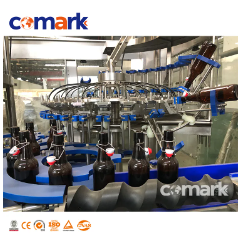
If a small winery doesn't have the necessary tools, bottling wine can quickly become a challenge. To protect quality, you need to use a setup that fits your needs, whether you fill hundreds of bottles a week or prepare yourself for seasonal surges. Cleaning, minimizing spoiling, and being accurate are also important, along with speed. Many wineries start with hand-operated fillers and later switch to equipment that are reliable and affordable as demand rises. This guide is all about that stage.
Budget-friendly and affordable: where small wineries start
Since small wineries are just starting out, their budgets are tight. Their goal is to purchase equipment that works, fits in the space, and holds money until the bottles are on the shelves. Many winemakers employ gravity or vacuum fillers. The Enolmatic single-head vacuum filler is a popular choice because it is tiny, cheap (less than $1,000), and easy to clean. Manual corkers or levers are similarly cheap, but they are slow and don't require much of a run, where one person fills the bottle, other corks it, and a third labels it. Space is also a big concern because most people use garages or barns. This is why tabletop fillers and modular solutions are better than conveyor belts. People buy used rinsers, corkers, or cappers, but they should check the seals and hoses first. In this situation, "flexible tools" means starting small but having the potential and space to grow.
Simple operation and user-friendliness: a must for limited manpower
Running a small winery means having fewer people to help, easy-to-use bottling equipment is just as important as affordability. Semi-automatic fillers are a fantastic choice because they load by hand but can also manage how much they fill and stop on their own. With push-button or foot-pedal controls, one person can fill while others cork and label. Even with volunteers, clear signs, safety stops, and brief guides save time and mistakes. Cleaning should be easy, with pieces that come off or cycles that clean themselves. One family in Oregon cut their bottling time in half by switching from a manual filler to a semi-automatic one with presets. Even their kids could help after a quick demo. User-friendly machines help small teams meet tight deadlines.
Stability and reliability and basic accuracy: the key to ensuring filling quality
Bottling uniformity is also a significant matter because every bottle should have the right quantity of liquid. Consistent, reliable, and accurate equipment makes customers happy, prevents waste, and ensures that you are not in trouble with a law enforcement agency. Piston fillers, gravity, and vacuum fillers help the small wineries to maintain a steady flow and proper measurements. Types of pistons pull a constant amount of volume which reduces spillage and also saves money. Also, reliable machines break down less often, and it's easier to get replacements if you choose trusted manufacturers with good parts. Semi-automatic fillers are those where the manual input is combined with the sensors or timers to achieve the more precise fill levels. One of the California vineyards cut waste by replacing a fully automatic vacuum filler with a semi-automatic one. The final stage before wine reaches consumers is the bottling stage hence the employment of effective and precise equipment ensures safety of quality, reputation and profitability.

